
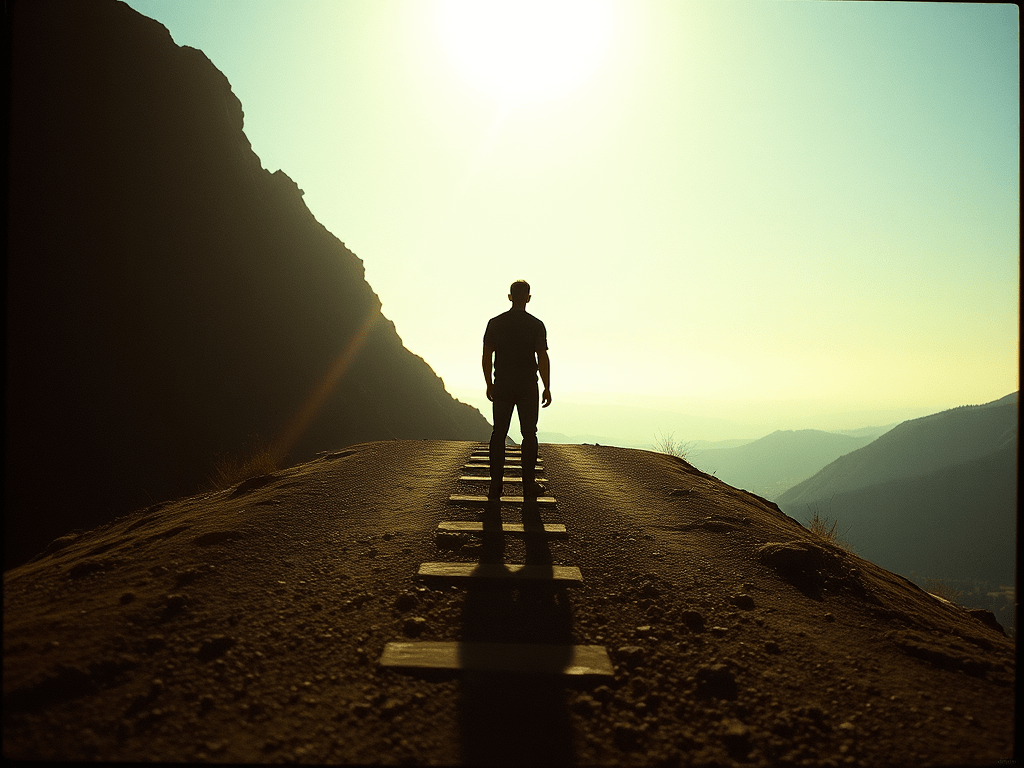
It’s one of the most quietly asked questions of our time:
Why don’t they see it?
“They” could be friends, family, coworkers, or strangers online. Individuals appear entrenched in a worldview that opposes evidence, empathy, or even fundamental truths. In an age where information is everywhere, this kind of resistance can feel not only confusing but dangerous.
But belief, especially political or ideological belief, is rarely about facts alone. It’s about identity, community, fear, protection, and sometimes pain.
So what would it actually take for someone to reevaluate a worldview they’ve held onto for years? Here’s what we know from psychology, anthropology, geopolitics, and history.
—
The Psychological Threshold
Change often begins when belief becomes emotionally or personally painful. One of the strongest internal forces is something psychologists call cognitive dissonance—that uncomfortable feeling when someone’s lived experience contradicts what they believe to be true. The greater the dissonance, the more pressure the mind feels to resolve it.
Sometimes that pressure creates a break.
Another powerful moment occurs when a person’s identity begins to loosen. People often don’t just have beliefs; they are their beliefs. So when someone begins to grow beyond the narrow role a belief gives them, whether through personal growth, age, crisis, or spiritual awakening, there’s room for evolution.
—
Social Shifts and Exposure
Belonging plays a huge role in belief. Most people are less attached to ideas than they are to the people who hold them. When someone’s “tribe” begins to lose status or behave in ways that feel morally incoherent, the sense of belonging may start to fray.
This phase is often when people begin to distance themselves, not because of a single fact or debate, but because the social cost of staying loyal has grown too high.
On the other hand, exposure to new voices is important. A shift in worldview is more likely when someone is surrounded by trusted individuals who hold differing views, whether they are family members, coworkers, spiritual mentors, content creators, or even artists. These voices can serve as a bridge, creating space between loyalty and questioning.
—
Historical Disruption
Historically, worldviews shift in response to crises, wars, economic collapses, social movements, environmental disasters, and political betrayals. These events disrupt people’s ability to keep living in a comfortable story.
They can no longer avoid asking, what if I’ve been wrong?
Another major factor is global reflection. When a movement, ideology, or nation begins to see itself through the lens of the outside world, there is often a mirror held up that’s impossible to ignore.
—
What Actually Works
Most people don’t change because they’re bombarded with statistics or made to feel ashamed. In fact, shame and mockery often push people further into the comfort of their in-group.
What opens people up?
Trusted relationships across ideological lines
Personal storytelling
Compassionate accountability
The ability to exit with dignity
And what rarely works?
Public shaming
Online ridicule or sarcasm
Info dumps or data overload
Forcing an ideological conversion
—
People change when the story they’re living in stops making sense.
But what they change into depends on who shows up to guide them.
—
Why This Matters
If you’re someone hoping to shift a mindset, whether in your family, community, or broader culture, this is your invitation.
Not to dominate the conversation. Not to win the debate.
But to model integrity, clarity, and courage.
To be someone others can feel comfortable approaching, not running away from.
Because in the end, belief is built on story.
And the right story, told at the right moment, still has the power to change everything.
 THE CS COLUMN