
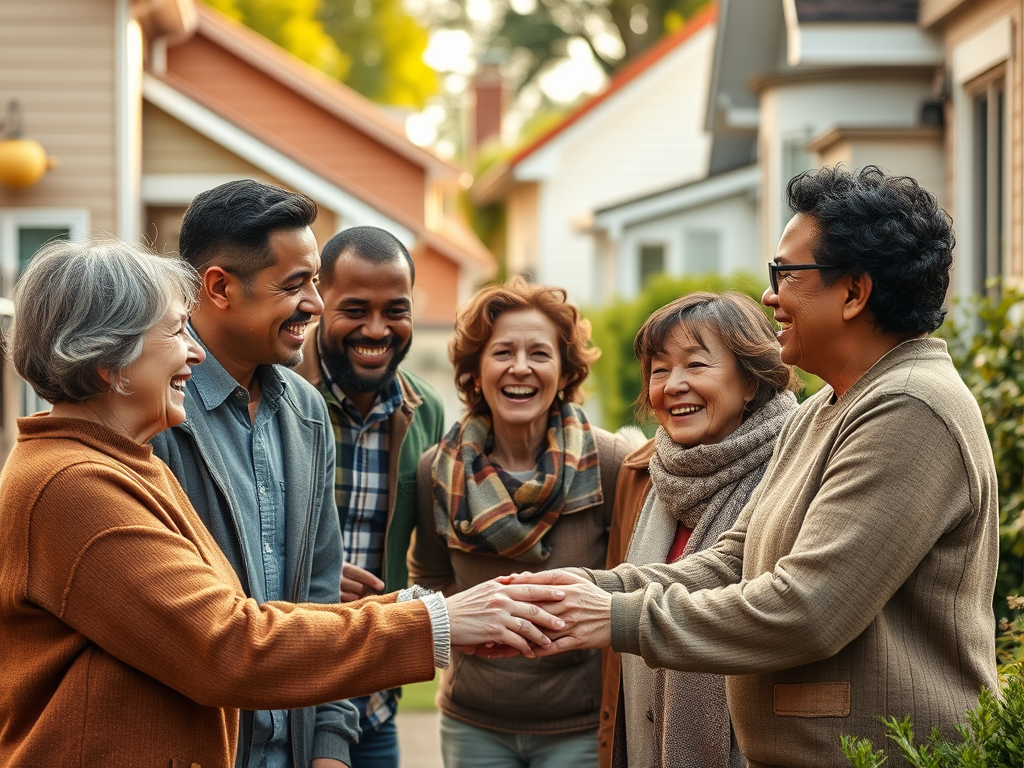
What Would Change if We Saw Each Other as Neighbors?
Headlines about conflict and war move across our screens almost daily now. The scale of those events can make us feel distant from them, as if they belong to another world. Yet beneath the headlines lies a question much closer to home: how do we see the people around us?
There was a time when communities were more visibly woven together. Neighbors knew one another’s names. A question about someone’s well-being was not unusual. Today many societies, especially highly individualistic ones, have grown more fragmented. People live side by side but often remain strangers.
Sociologists have long observed that strong communities are built on trust and mutual care. When people believe their neighbors care about them, they are more likely to cooperate, support one another, and invest in shared well-being (Putnam, 2000). When that trust disappears, the social fabric begins to thin.
Consider something simple. Imagine driving down a busy road. You notice the car beside you and suddenly realize the driver is someone you care about—a friend, a sibling, a neighbor you value. Instinctively, your behavior changes. You become more careful. If you see something dangerous ahead, you want them to know. Their safety matters to you.
Now imagine something even more radical: what if we viewed every person on that road as someone whose life carried that same kind of value?
The idea may sound idealistic, but it touches on a moral intuition shared across cultures. People naturally expect to be treated with dignity. When someone cuts us off in traffic, ignores our needs, or acts carelessly in ways that affect our families, our reaction often reveals that expectation. We feel that something deeper has been violated.
Scripture captures this intuition in what is often called the golden rule: “Whatever you want men to do to you, do also to them” (Matthew 7:12, NKJV). This simple principle suggests that the kind of world we long for is closely tied to the way we choose to treat others.
Psychology offers another insight here. Humans are wired for empathy, the ability to imagine the inner life of another person. Research shows that when people pause to consider another’s perspective, hostility often decreases and cooperation becomes more likely (Batson, 2011). In other words, imagining the humanity of another person changes our behavior.
Perhaps that is where reflection begins. When we encounter someone behaving badly—driving too fast, speaking harshly, acting carelessly—we often assume the worst about their character. But what if we asked a different question?
What if they are rushing to an emergency?
What if they are carrying burdens we cannot see?
This does not excuse harmful behavior. Boundaries and accountability still matter. Yet it does invite us to approach others with a measure of humility.
Imagine the difference if societies were built on that posture. Not naïve optimism, but thoughtful consideration. Not blind trust, but genuine concern for the well-being of others.
Communities change when individuals begin to see the people around them differently. The person in the next car. The neighbor upstairs. The stranger at the store.
Each one carries a story, a family, a life that matters.
So perhaps the question worth reflecting on is this: if we truly believed that every person we encounter carries dignity and value, how might it change the way we move through the world?
Further reflections will explore how empathy, responsibility, and moral vision shape the kind of communities we create together.
References
Batson, C. D. (2011). Altruism in humans. Oxford University Press.
Holy Bible, New King James Version. (1982). Thomas Nelson.
Putnam, R. D. (2000). Bowling alone: The collapse and revival of American community. Simon & Schuster.
 THE CS COLUMN